AI Poster Workflow
Turning one-off AI generation into a controllable, reusable and editable social-visual production workflow.
Context
Designed a repeatable AI poster workflow to address repetitive prompt writing, inaccurate generated text, hard-to-edit outputs and inconsistent visual styles.
Solution
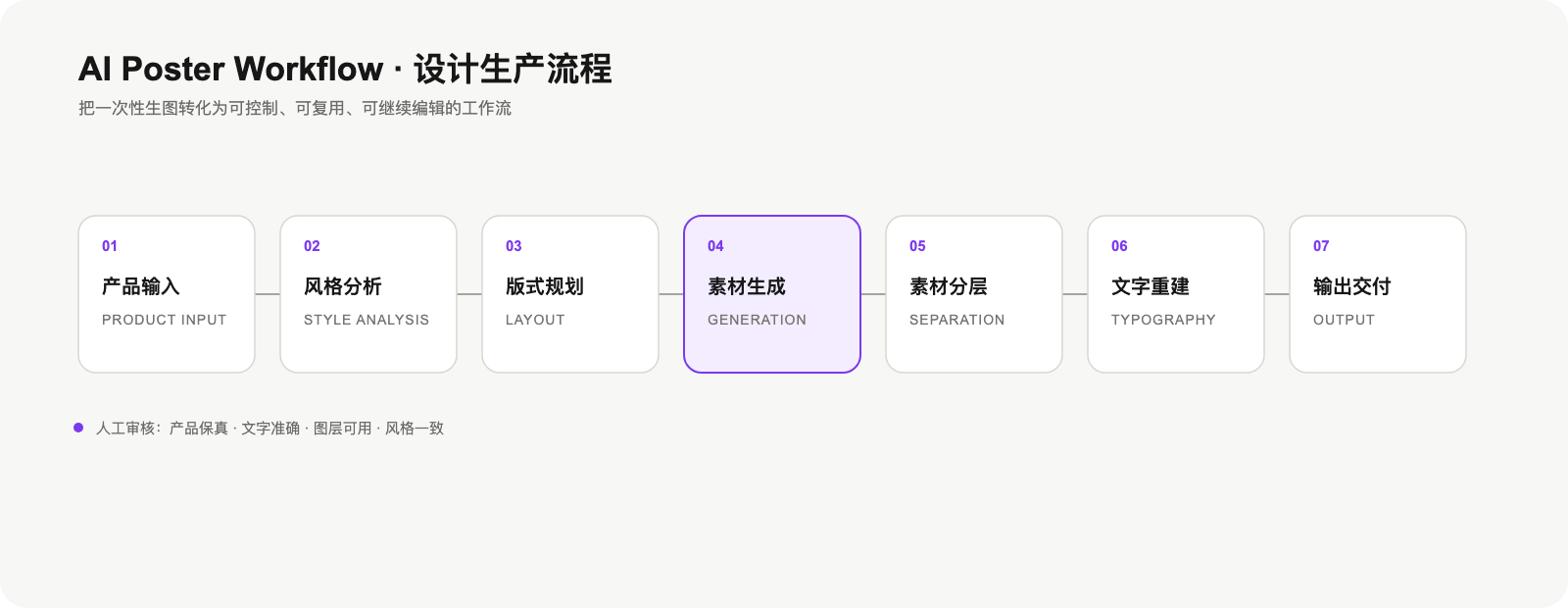
Structured the workflow as product input → reference-style analysis → layout planning → asset generation → layered background, decoration and lighting → typography rebuild → delivery, translating references into reusable typography, layout, color and texture rules.
Outcome
Completed the workflow logic, input-output specification and prototype validation, turning one-off generation into a controllable, reusable and editable design-production process.
context
Traditional AI image generation still requires repeated prompting and extensive post-production in poster work. This project starts from a real delivery context and integrates generation into a stable, repeatable production process.
The goal is not one more image, but a repeatable way to produce design work.problem
Prompts must be rewritten repeatedly, generated copy is error-prone, outputs are difficult to edit, and visual styles are hard to reproduce consistently across projects.
Efficiency, accuracy, editability and visual consistency are constrained at the same time.insight
The real value lies beyond generation: translating references into explicit rules and separating imagery, typography and visual effects into independently editable layers.
Repeatability comes from explicit rules, not from remembering a single prompt.solution
A product-input and reference-driven AI poster workflow that coordinates visual analysis, layout, asset generation, layering and final delivery.
Move from one-off generation to a controllable, reusable and editable production system.product design
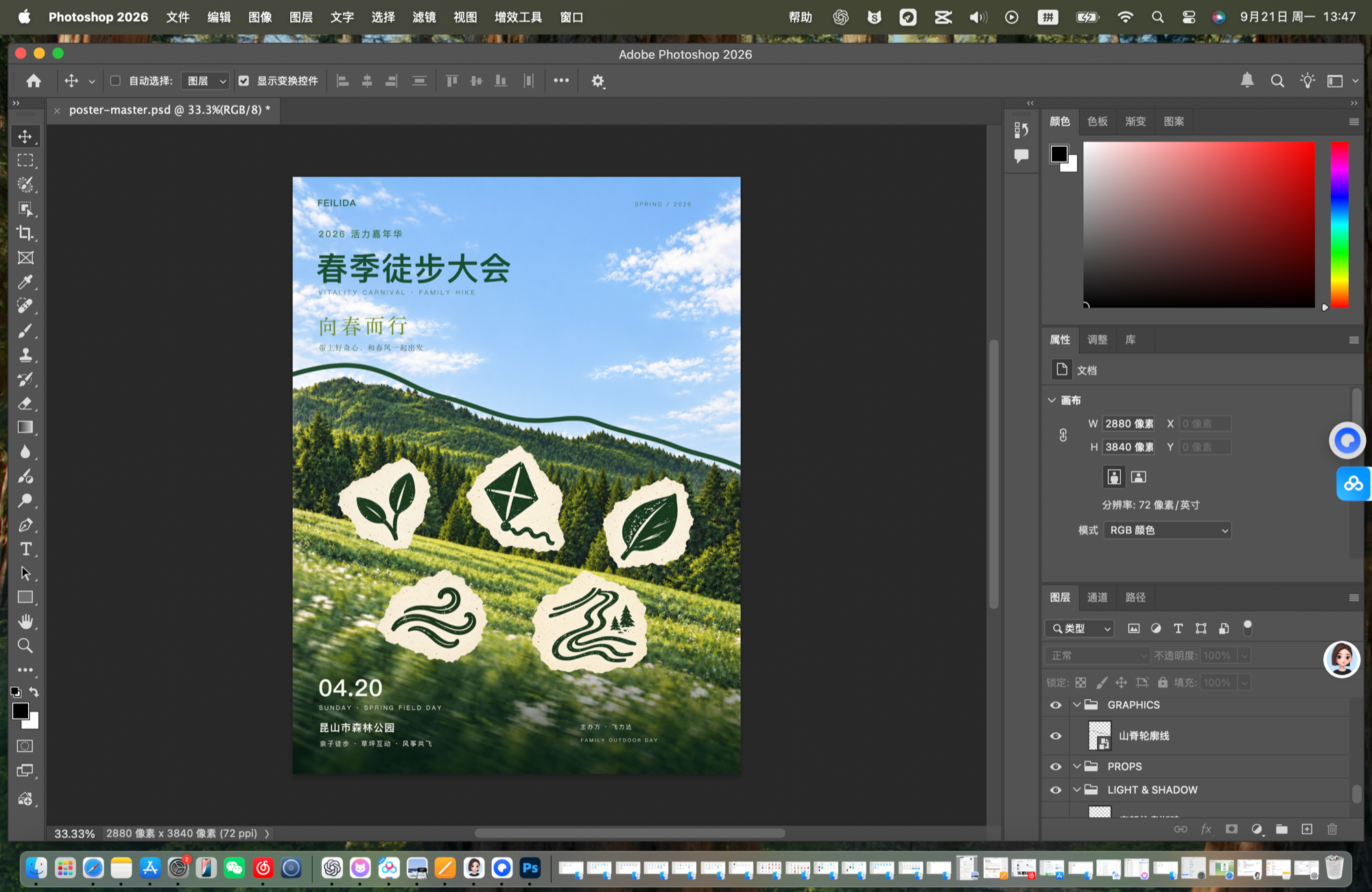
Defined how product inputs and references enter the system, translated typography, layout, color and texture into reusable rules, and specified layered delivery for backgrounds, decoration, lighting and text.
The final deliverable remains editable so a designer can continue refining it.ai workflow
The workflow is structured as: product input → reference-style analysis → layout planning → asset generation → layered background, decoration and lighting → typography rebuild → delivery.
Each stage has explicit inputs and outputs, making it reusable, reviewable and adjustable.build
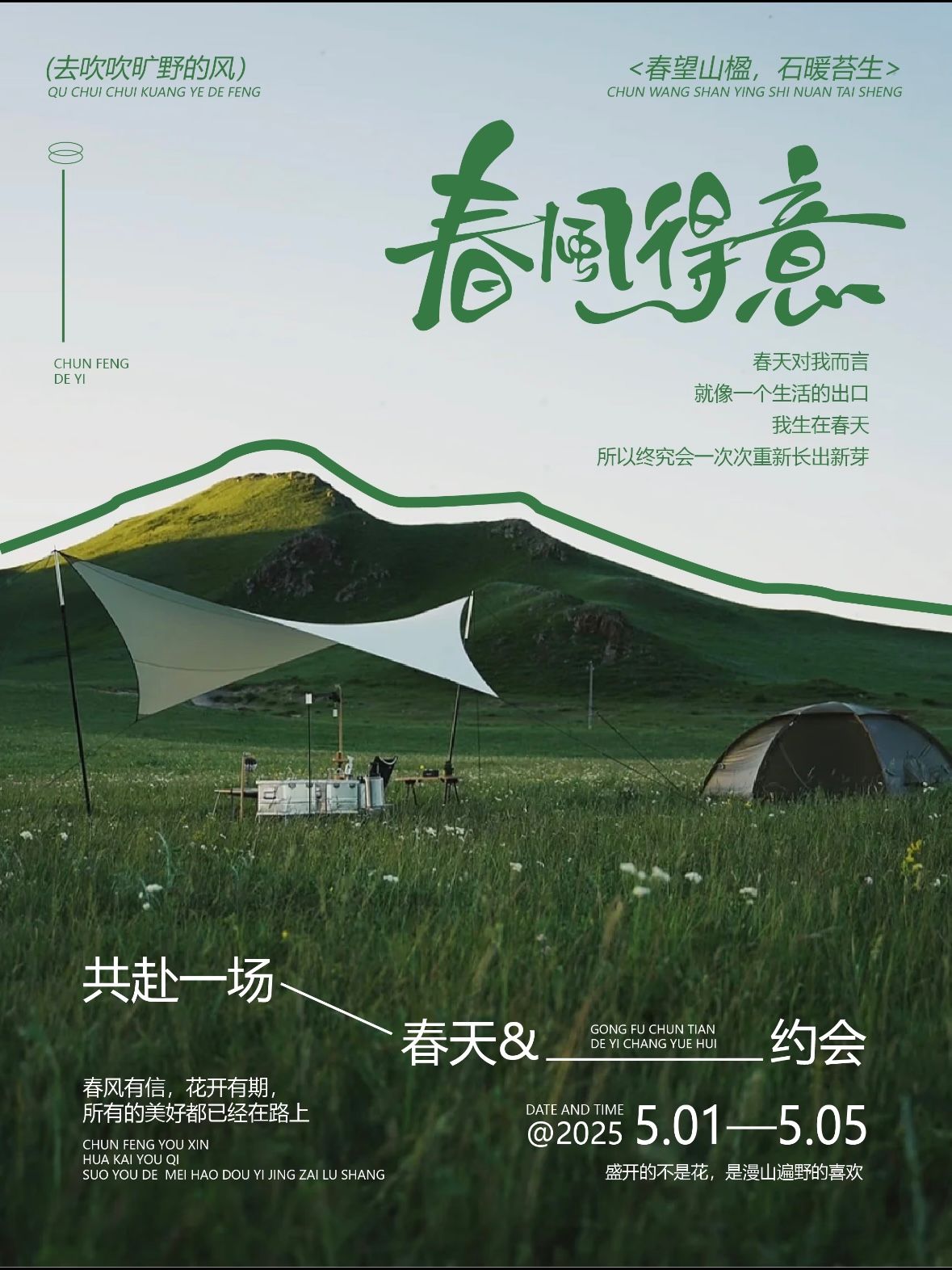
Reference posters are decomposed into reusable descriptions of typography, layout, color and texture. Assets are then generated by module and assembled in professional design software for refinement.
AI accelerates asset and concept exploration while human judgment retains final visual control.validation
A poster prototype was used to verify whether the workflow could reliably move from product inputs and references to an editable design file.
Workflow logic, input-output specifications and prototype feasibility have been validated.